
How Do Humidification Systems Work?
Humidification systems work by adding moisture to the air to raise relative humidity to a controlled level. This is done by converting water into water vapor and distributing it into an air stream or space.
While the goal is simple, the method of adding moisture can vary significantly depending on the system type, application, and the level of control required.
Key takeaway: Humidification systems increase humidity by adding water vapor to the air in a controlled way.
The Basic Process
All humidification systems follow the same basic steps:
- Water is supplied to the system
- Water is converted into vapor or fine droplets
- Moisture is introduced into the air
- Controls adjust output to maintain a target humidity level
Sensors monitor relative humidity and signal the system to increase or decrease output as needed.
Key takeaway: Humidification is a controlled process of adding moisture and adjusting output in response to real‑time conditions.
Two Primary Methods of Humidification
Most commercial humidification systems fall into two main categories:
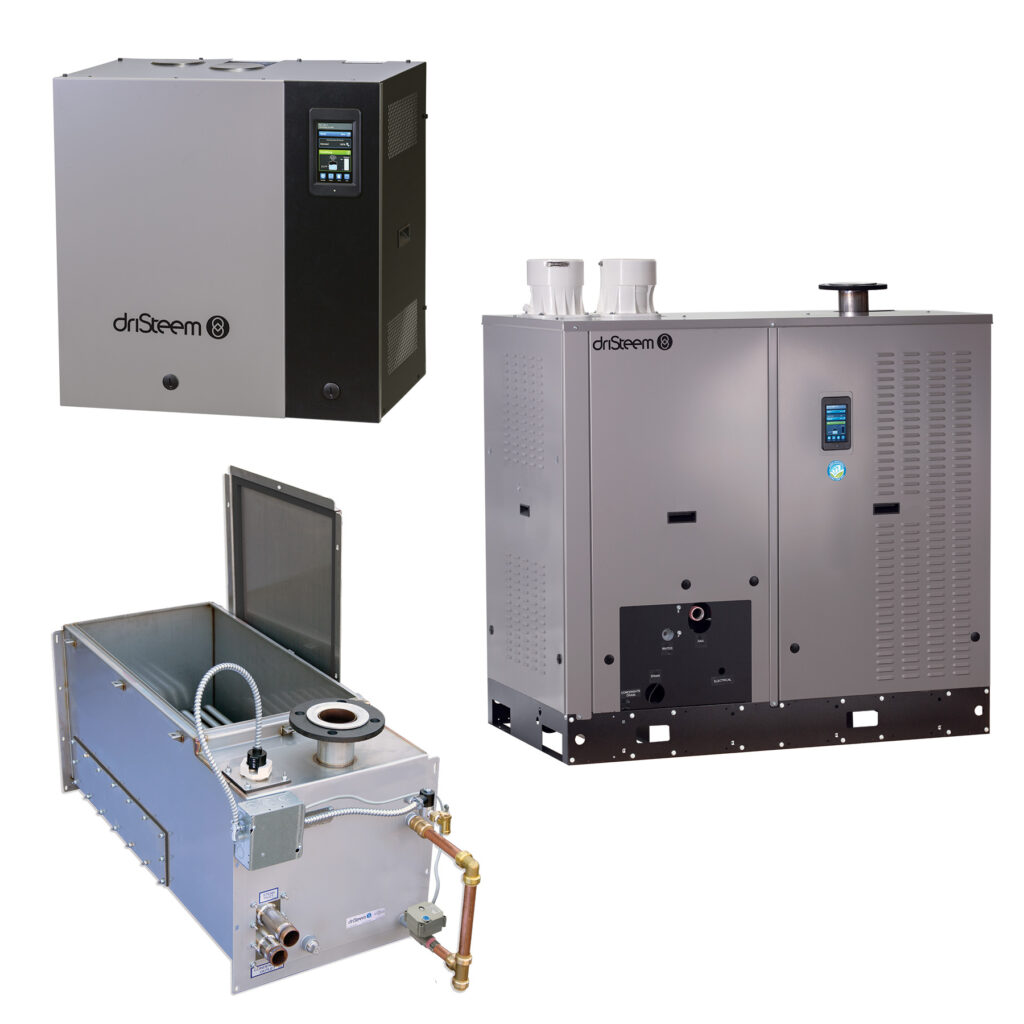
1. Steam (Isothermal) Humidification
Steam systems boil water to create pure water vapor, which is then injected into the air stream.
- Uses electricity, gas, or building steam as a heat source
- Produces vapor directly, with no need for evaporation in the airstream
- Provides fast, precise humidity control
- Does not significantly change the air temperature
Steam humidification is commonly used where tight control and reliability are required.
Key takeaway: Steam systems add moisture by creating vapor directly from boiling water.
2. Evaporative (Adiabatic) Humidification
Evaporative systems introduce liquid water into the air, which then evaporates.
Common approaches include:
- Wetted media or pads
- High‑pressure or ultrasonic mist
- Spray or atomization systems
In this process:
- Water absorbs heat from the air as it evaporates
- Air temperature may decrease slightly
- Energy use is typically lower than that of steam systems
Evaporative humidification relies on airflow and temperature to complete the evaporation process.
Key takeaway: Evaporative systems add moisture by allowing water to evaporate into the air.
How Moisture Is Distributed
Once moisture is created, it must be properly introduced and mixed into the air.
This typically happens through:
- Injection into HVAC ductwork
- Distribution tubes or panels
- Direct space humidification
Proper distribution ensures:
- Even humidity throughout the space
- Sufficient absorption distance
- Minimal condensation risk
Key takeaway: Adding moisture is not enough. It must be evenly distributed and fully absorbed.
The Role of Controls and Sensors
Humidity control systems rely on sensors and control logic to maintain stable conditions.
A typical system includes:
- A humidity sensor (humidistat)
- A controller that compares actual vs target humidity
- A humidifier that adjusts output in response
Advanced systems may also include:
- High‑limit sensors to prevent condensation
- Integration with HVAC operation
- Seasonal or temperature‑based adjustments
Key takeaway: Controls ensure the system adds the right amount of moisture at the right time.
Why Temperature Matters
Humidity is directly tied to temperature. As air temperature changes:
- Relative humidity changes
- Evaporation rates change
- Condensation risk increases or decreases
Some systems, especially evaporative types, rely on the heat in the air to drive evaporation. Others, like steam systems, generate vapor independently of air temperature.
Key takeaway: Humidification works within the temperature‑humidity relationship, not separately from it.
Why System Selection Matters
Different applications require different humidification approaches.
For example:
- Cleanrooms and healthcare often require precise steam control
- Data centers may balance humidity and cooling needs
- Industrial spaces may favor energy‑efficient evaporative systems
Choosing the right system depends on:
- Required control accuracy
- Energy considerations
- Maintenance and water quality
- Space and airflow conditions
Key takeaway: There is no single “best” humidification method. The right choice depends on the application.
Common Misunderstanding
A common misconception is that humidification is simply “adding more moisture.” In reality:
- Too much moisture increases condensation risk
- Poor distribution leads to uneven conditions
- Lack of control creates instability
Effective humidification requires coordination between the humidifier, HVAC system, and control strategy.
Key takeaway: Humidification is about controlled balance, not just adding moisture.
Related Topics
- Humidity Control Fundamentals
- Humidity Setpoints: How to Choose Targets Without Causing Condensation
- What Is a Good Indoor Humidity Range?
- Humidity Control Is Not “Run the Humidifier Harder”
- What Is Dew Point and Why It Matters
Connect with a humidity control expert
Next Steps
Contact your local DriSteem representative to learn more about humidity control. Use the Find a Rep tool below to find your nearest representative.