
Humidity vs Relative Humidity: What’s the Difference?
Humidity and relative humidity are related, but they describe moisture in the air in different ways.
Understanding the difference matters because buildings, HVAC systems, and humidification controls are almost always designed around relative humidity rather than total moisture.
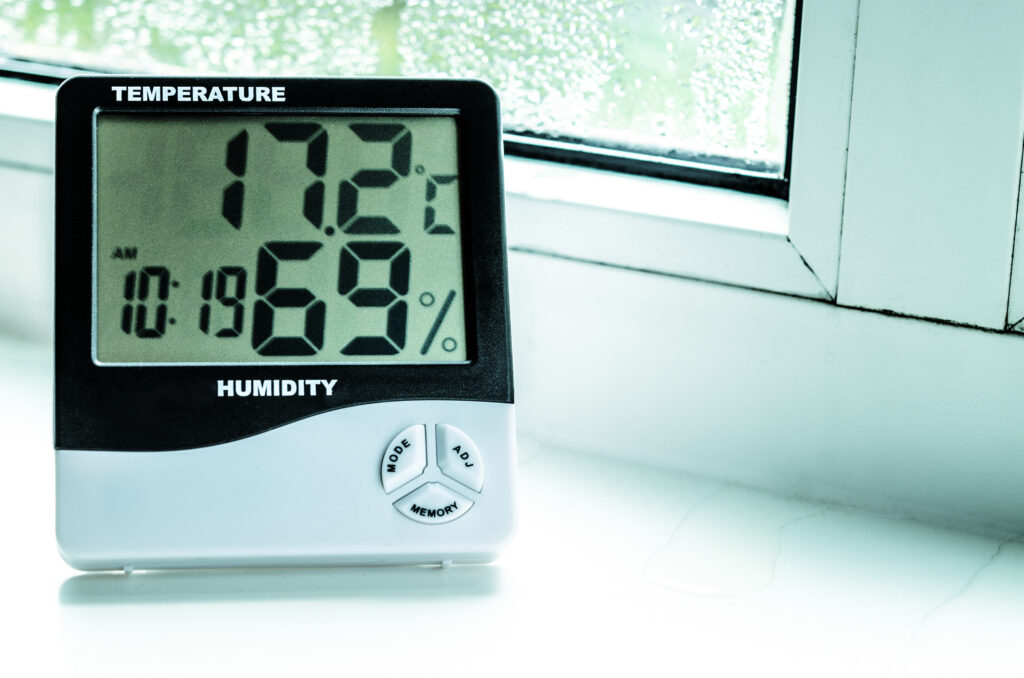
What Is Humidity?
Humidity is the actual amount of water vapor present in the air. It describes how much moisture is physically in the air, regardless of temperature.
Humidity can be expressed in several technical ways, such as the mass of water vapor per unit volume of air, but these measurements are rarely used directly in everyday building operations.
Key takeaway: Humidity tells you how much moisture is in the air, but it does not tell you how that moisture will behave.
What Is Relative Humidity?
Relative humidity (RH) compares the amount of moisture in the air to the maximum amount the air can hold at a specific temperature. It is expressed as a percentage.
For example:
- 50% RH means the air is holding half of the moisture it could hold at that temperature
- 100% RH means the air is fully saturated
Relative humidity is the value most commonly measured, displayed, and controlled in buildings.
Key takeaway: Relative humidity shows how close the air is to saturation, not just how much moisture is present.
Why the Difference Matters
Air’s ability to hold moisture depends on temperature. Warm air can hold more moisture than cold air. This means:
- The same air can have the same humidity but different relative humidity
- Relative humidity changes when temperature changes, even if no moisture is added or removed
For example, when cold outdoor air is heated indoors during winter, its relative humidity drops sharply, even though the moisture content stays the same.
Key takeaway: Relative humidity changes with temperature; total humidity does not.
Why Buildings Use Relative Humidity, Not Total Humidity
Most building‑related problems are driven by how moisture behaves, not just how much moisture exists. Relative humidity directly affects:
- Comfort and perceived air “dryness” or “stickiness”
- Static electricity risk
- Condensation and mold potential
- Material stability and equipment performance
Because RH predicts these outcomes, it is the primary control variable used in HVAC and humidification systems.
Key takeaway: Relative humidity is used for control because it correlates directly with risk and performance.
A Simple Side‑by‑Side Comparison
Humidity
- Measures total moisture in the air
- Does not change when the temperature changes
- Rarely used directly for building control
Relative Humidity
- Measures moisture relative to temperature
- Changes when air is heated or cooled
- Used for comfort, control, and system design
Key takeaway: Humidity describes quantity; relative humidity describes conditions.
Common Misunderstanding
A common misconception is that “dry air” means there is no moisture present. In reality, air always contains some moisture. Problems occur when the relative humidity is low, not when moisture is absent.
This is why humidification is often needed in heated buildings, even though outdoor air contains moisture.
Key takeaway: “Dry” indoor air usually means low relative humidity, not zero moisture.
Related Topics
- Humidity Control Fundamentals
- What Is Relative Humidity (RH)?
- Why Relative Humidity Changes When Air Is Heated
- What Humidity Level Is Too Low or Too High?
- What Problems Does Low Humidity Cause?
Connect with a humidity control expert
Next Steps
Contact your local DriSteem representative to learn more about humidity control. Use the Find a Rep tool below to find your nearest representative.